


Sniper 3D:Gun Shooting Games
4.6450.58K Reviews
App Specs
- Version
- 7.5.3
- Updated On
- License
- Free
- Downloads
- 500,000,000+
- Developer
- Wildlife Studios
- Categories
- Action
- Platform
- Android, iOS
Screenshots
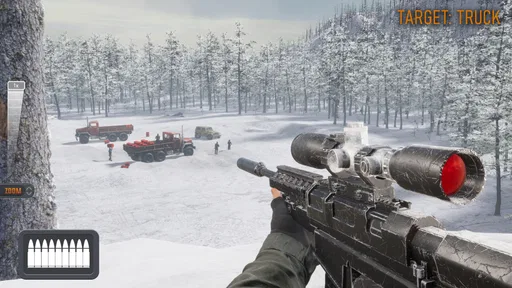
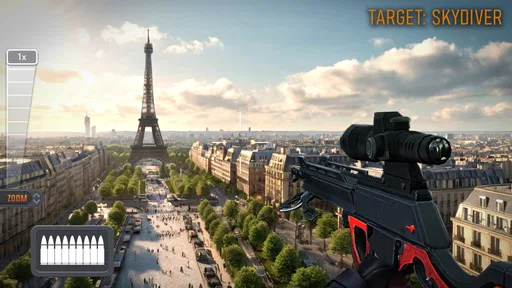
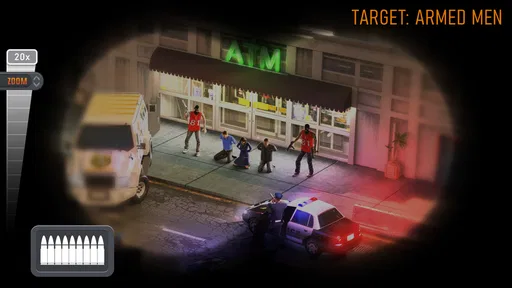
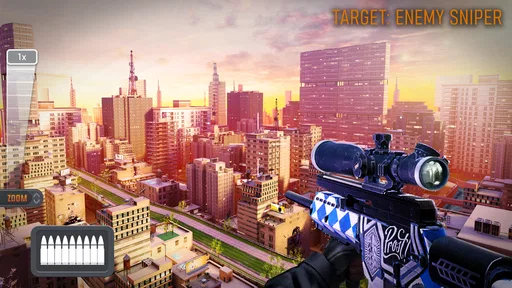
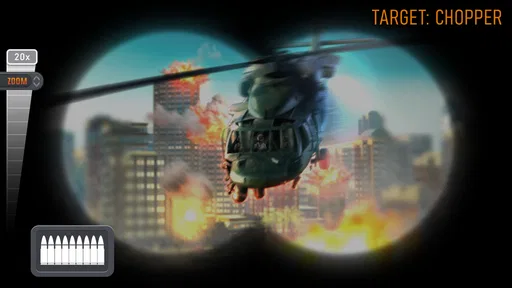
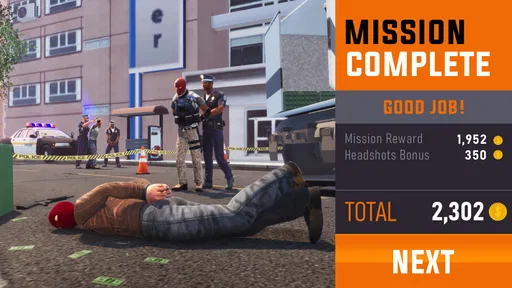
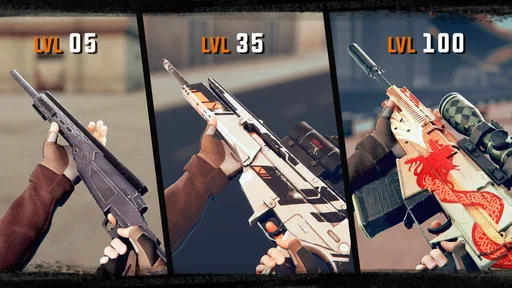
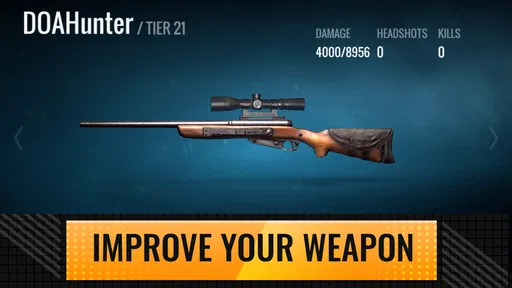
 Analysis by AppCompare
When I first tried Sniper 3D: Gun Shooting Games, I expected a quick mobile shooting game and found something better suited to short, repeatable sessions than to one long campaign. It is an action game from Wildlife Studios that mixes sniper missions with online and offline multiplayer shooting. The basic appeal is easy to understand: line up a target, control the shot, complete the objective, and use the reward to keep moving forward. The harder question is whether that loop fits your household, your patience, and the way you prefer to play.
I think it works best when treated as a pick-up-and-play game rather than a serious replacement for a console or PC shooter. A few minutes can be enough to finish a mission, while longer sessions give you room to improve equipment and take part in competitive play. That flexibility explains why it has become such a familiar name in mobile action gaming. It is free to start, carries a Mature 17+ age rating, and includes optional purchases ranging from $0.99 to $224.99 per item, so the practical experience depends partly on how carefully you manage play and spending.
How it fits into a shared household
The most useful way I found to judge this game was to imagine a shared phone or tablet in a busy home. One person might use it during a commute, another might pick it up while waiting for dinner, and someone else might want to try the multiplayer side later. In that situation, the game is convenient because its missions are naturally divided into small attempts. You do not need to reserve an entire evening to get something out of it.
Guides and Analysis on Sniper 3D:Gun Shooting Games
That convenience does not mean every session feels equally relaxed. Sniper missions reward concentration, and a noisy room can make a carefully timed shot frustrating. Multiplayer adds another layer: if one household member is using the device for a live match, interrupting the session is less considerate than handing over a game that can be paused or abandoned without consequence. I would agree on turns before starting, especially if the device is shared among several people.
A realistic example would be a parent using the game for ten minutes after work, then letting an older teenager try a few missions. The parent can enjoy the straightforward shooting loop, while the teenager may be more interested in the competitive side. The important boundary is that these are separate play intentions. A quick solo session and a focused multiplayer session should not be treated as interchangeable, even though they are inside the same app.
On a shared device, I would also avoid assuming that progress, preferences, or purchases automatically represent the whole household. Each player should know whose session is active before playing. That simple habit prevents accidental changes and makes it easier to keep personal goals separate. The game is more enjoyable when everyone understands whether they are continuing someone else’s progress or simply trying a mission for themselves.
What the first sessions actually feel like
The opening experience is built around immediate action rather than a long explanation. You are placed in the role of a sniper, and the central task is to observe the scene, aim, and fire with enough care to complete the objective. I like that the premise is readable within seconds. There is no need to learn an elaborate control scheme before understanding what the game wants from you.
Worth Reading Before You Choose

Basketball Stars: Multiplayer Is Fast, but Can It Recover When Matches Go Wrong?

WEBTOON Turns Phone Updates Into a Better Reading Routine

Link to Windows Runs on Shared Habits, Not Social Feeds

How Alibaba.com Dominates the B2B Marketplace
Metro's Quiet Rise: Redefining Mobile Communication

Harnessing Ecosystem Power with Phone Tracker by Number
That simplicity can also expose the game’s main weakness. Repeated aiming and firing can become familiar quickly, especially if you want a deep tactical shooter with broad movement, complex maps, or a large range of combat roles. This is a focused mobile formula. It is satisfying when you want precision in short bursts, but it may feel narrow if you are looking for the freedom of a full first-person shooter.
I found the best rhythm came from treating each attempt as a small challenge rather than rushing through every target. Watching the environment before touching the trigger is more useful than simply reacting. In some situations, the first shot is not the only consideration; the order in which you handle the objective can affect how calmly the rest of the mission unfolds. That observation-first habit is one of the easiest ways to make the game feel less repetitive.
Setting boundaries before anyone starts
Because the game is free to download but includes in-app purchases, I would establish a spending rule before handing over a shared device. The listed purchase range reaches from $0.99 to $224.99 per item, which is a significant difference between a small optional purchase and a very large one. I would not leave that decision to a child or to a guest using the device casually.
This is not an argument that every player will spend money. Many people can enjoy a free-to-play game without buying anything. My point is that the purchase structure deserves an adult conversation in a household where payment access is shared. Decide who may approve a purchase, whether the game is strictly free to play, and what to do if someone wants to progress faster. A clear rule is less stressful than trying to sort out an accidental transaction afterward.
I would also separate the idea of “trying the game” from “building a long-term account.” A guest can play a short session without needing to take ownership of the whole experience. If several people use one device, it helps to say out loud when a person is only experimenting and when they are changing the main player’s progress. This is especially useful for younger users, who may not immediately understand that an upgrade or purchase can affect someone else’s play.
The current version is 7.5.1, and the game supports devices running Android 7.1 or later. Those details matter when a household keeps an older phone for occasional use. Before planning a family game night around it, I would check that the intended device meets the operating-system requirement and has enough practical battery life for the session. A game can be popular and still be a poor fit for an aging spare device.
Coordinating solo play and multiplayer
The store summary describes both online and offline multiplayer, with live player-versus-player play available for friends. That combination gives the game more range than a purely solo sniper title. Offline play is useful when you want a self-contained session, while live PvP adds pressure and a reason to compare performance with other people.
For household coordination, the distinction is important. Offline play is the safer choice when the player may need to stop suddenly. Live PvP is better reserved for a time when the player can concentrate and finish the match without passing the device around. I would not start a competitive session just before leaving the house or while expecting an interruption.
Playing with friends can also change the mood of the game. A solo mission lets you focus on your own timing and improvement. PvP introduces comparison, which some players find motivating and others find tiring. If a younger family member becomes upset after losing, the competitive mode may need to remain an occasional activity rather than the default way to play.
One practical tip is to use solo missions as a warm-up before live play. This gives the player a chance to settle into the aiming controls instead of learning them under competitive pressure. It also makes the multiplayer result easier to interpret: a poor match may come from rushing or distraction rather than from a complete lack of skill. That small routine helped me enjoy the competitive side without letting it dominate the whole experience.
Another trade-off is attention. In a shared environment, one person’s live match can make the room feel temporarily unavailable to everyone else, while a solo mission is easier to fit around ordinary household activity. If coordination matters more than competition, solo play is the more considerate default. If everyone has agreed on a dedicated time, PvP becomes a fun shared event rather than a source of interruptions.
Age, trust, and the Mature 17+ rating
The Mature 17+ rating should be taken seriously when deciding who may play. The game’s central theme involves firearms and shooting, so it is not something I would casually place in front of a young child simply because it appears on a phone. A household should make that choice based on the age context, the player’s maturity, and the family’s own comfort with realistic action themes.
The rating is also a useful reminder that shared-device access is not the same as shared approval. An older teenager may be an appropriate player in one home, while another household may prefer to keep the game limited to adults. I would talk through the content before allowing access rather than relying on the player to judge it after installation.
Trust matters in another way too. A player should understand that online interaction and competitive play can feel more intense than a quiet solo mission. Even without turning the game into a family policy discussion, it is sensible to agree on respectful behavior, reasonable session length, and what to do if competition becomes unpleasant. The goal is not to remove the action; it is to make sure the person using it knows what kind of experience they are choosing.
For adults, the rating is unlikely to be a barrier if they already enjoy mobile shooters. For younger users, I would be more cautious, particularly when the device is shared and the game can be opened without much preparation. If age suitability is the deciding factor, a less mature puzzle, racing, or arcade alternative would be a better choice than trying to make this title fit every member of the household.
Where it stands beside other mobile shooters
Compared with movement-heavy first-person shooters, this game is more specialized. Its sniper focus makes aiming and target selection the center of attention, rather than constant running, close-range combat, or team positioning across a large battlefield. That is a strength for players who like deliberate shots and compact objectives. It is a weakness for anyone who wants broad freedom of movement and a wider tactical vocabulary.
Compared with a purely offline shooting game, the online PvP option gives it more social energy. You can play alone when that suits you, then move into live competition when you want a challenge involving other people. The trade-off is that competitive play demands better timing and more uninterrupted attention than a casual solo mission.
Compared with premium games that ask for an upfront payment, the free entry is easier for a household to test. You can find out whether the aiming loop suits you before committing money. The disadvantage is the presence of optional purchases, including high-priced items, so the free starting point requires more spending discipline than a one-time purchase would.
I would choose this game over a larger shooter when I wanted a quick precision challenge, a familiar action theme, or a way to alternate between solo and multiplayer sessions. I would choose another game when I wanted a slower story, a family-friendly rating, deep squad tactics, or a competitive experience built around movement and teamwork rather than sniping.
Small habits that improve the experience
The first useful habit is to slow down before firing. Mobile controls can make a rushed shot feel tempting, but a few seconds spent reading the scene usually produces a more controlled attempt. I found that this also reduces the feeling of repetition, because each mission becomes an exercise in observation rather than a reflex test.
The second is to separate improvement from progress. Advancing through missions can be satisfying, but repeating a difficult section with a specific goal—better timing, fewer wasted shots, or calmer aiming—gives the session a clearer purpose. This approach is especially helpful when a player feels stuck and is tempted to spend money simply to move past the obstacle.
The third is to match the mode to the available time. Use a short solo session when the household is busy, and save live PvP for a period when interruptions are unlikely. That choice sounds obvious, but it prevents many of the frustrations people blame on the game itself. A competitive mode is rarely enjoyable when the player is already distracted.
I would also keep the device position consistent. A stable grip and a comfortable viewing angle matter more in a precision game than in a simple tap-based arcade title. On a shared phone, each person may hold it differently, so taking a moment to settle the device before a difficult mission is worthwhile. It is a small adjustment, but it makes the controls feel less unpredictable.
Who should install it, and who should skip it
I recommend it to adults and older teens who enjoy focused mobile action, want missions that can fit into short breaks, and like having both solo and competitive options. It is also a reasonable pick for friends who want to compare their shooting performance without committing to a long console-style session. The large audience is reflected in its 4.6 average from around 18 million ratings and more than 500 million installs, although popularity alone should not decide whether the style suits you.
I would skip it if you are looking for a family game with a broad age range. The Mature 17+ rating makes it a poor shared choice for a home with young children, even if the device itself is used by everyone. I would also skip it if optional purchases make free-to-play progression uncomfortable, or if you prefer games where every player starts with the same fixed content and no spending decisions.
Players who dislike repeated target-focused missions may lose interest as well. The game offers variety through its modes and progression, but the core identity remains sniper shooting. If you need exploration, extensive character development, or close teamwork as the main attraction, another action game will probably hold your attention longer.
My household verdict
After spending time with it, I see Sniper 3D: Gun Shooting Games as a flexible but clearly adult-oriented mobile action game. Its strongest quality is the way it turns a precise shooting idea into sessions that can be short, competitive, or offline depending on the moment. Wildlife Studios has made a game that is easy to understand quickly, which is valuable when several people may want to try it on the same device.
My recommendation comes with boundaries. Keep the age rating in view, decide who controls purchases, and distinguish a casual solo attempt from a live multiplayer session. Those steps are particularly important in a shared household, where one person’s progress, spending, or competitive match can affect everyone else’s use of the device.
For the right player, the game is a convenient way to enjoy mobile shooting without learning an enormous system. For the wrong player, its repeated sniper focus, mature presentation, and free-to-play purchase structure will become obvious drawbacks. I would install it for an adult or mature older teen who wants quick precision challenges and understands those trade-offs. I would not present it as an all-ages family game, but within the right household boundaries, it remains an enjoyable and approachable choice.
Pros
- Smooth controls make aiming and shooting easy for beginners.
- Hundreds of missions offer plenty of short gameplay sessions.
- Weapon upgrades provide useful progression and customization.
- Offline missions let you play without a constant internet connection.
- Realistic sound effects make each successful shot feel satisfying.
Cons
- Frequent ads can interrupt gameplay
- especially between missions.
- Energy limits may restrict how long you can play continuously.
- Upgraded weapons can become expensive without spending real money.
- Some missions feel repetitive after extended play.
- Large downloads and updates may consume considerable device storage.
FAQs for Sniper 3D:Gun Shooting Games
What is Sniper 3D: Gun Shooting Games about?
Sniper 3D: Gun Shooting Games is a mobile action game focused on long-range shooting missions. You take the role of a sniper, complete contracts, eliminate assigned targets, and gradually unlock more powerful rifles and equipment. Missions generally require careful aiming, timing, and accuracy rather than simply firing continuously. The game also includes different challenges and progression systems that keep the experience varied as you advance.
Is Sniper 3D: Gun Shooting Games free to download and play?
Yes, Sniper 3D: Gun Shooting Games can generally be downloaded and played for free on supported Android and iOS devices. However, it includes optional in-app purchases for items such as weapons, upgrades, currency, or other progression benefits. Players can enjoy many missions without paying, although progress may feel slower at certain points if they choose not to spend money. Always review the store listing and purchase settings before downloading.
Does the game require an internet connection?
Some features of Sniper 3D: Gun Shooting Games may require an active internet connection, particularly online events, advertisements, leaderboards, cloud-related services, and certain multiplayer or competitive modes. Availability can vary depending on the version installed and the device being used. Even if some missions work offline, connecting to the internet may be necessary to synchronize progress or access the complete selection of game content.
Is Sniper 3D suitable for children?
Sniper 3D: Gun Shooting Games contains realistic shooting themes, firearms, combat missions, and targets being attacked, so it may not be appropriate for younger children. The game can also include advertising, optional purchases, and competitive elements. Parents should check the age rating shown in the Google Play Store or Apple App Store, review the content personally, and enable parental controls if the game is installed on a child’s device.
What devices are needed to play Sniper 3D smoothly?
The game is designed for modern Android and iOS smartphones and tablets, but performance depends on the device’s processor, available memory, operating system, and free storage space. Older phones may experience longer loading times, reduced visual quality, or occasional lag. Before installing, check the official store page for the current compatibility requirements and make sure your device has enough storage for the initial download and future updates.


